
What Sleepers are Recommended for Mining Lanes
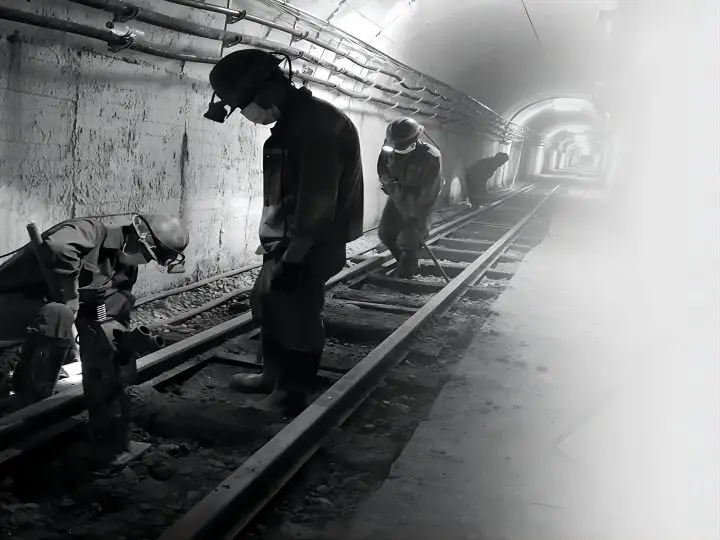
Mining engineering lanes are similar to railway lanes, and sleepers are materials used for laying railways and special track transportation equipment and paving load-bearing equipment: wooden sleepers, anti-corrosion sleepers, and composite sleepers.
The sleeper materials include: wooden sleepers, reinforced concrete sleepers, steel sleepers, and composite sleepers.
The uses of sleepers include: railway sleepers, special track sleepers, erection sleepers
The most important performance of sleepers is to be anti-corrosive, resistant to compression, and not expand or break.
At first, the wooden sleeper is used, the elasticity, strength and compression capacity of the wooden sleeper is not uniform, and it is easy to decay, mechanical wear and cracking, and it needs to be treated with anti-corrosion before the road, in order to extend the service life for a period of time, and it needs frequent maintenance and replacement halfway, and the price is relatively high.
Reinforced concrete sleepers have long service life, high stability, small maintenance workload, damage rate and scrap rate are much lower than wooden sleepers, but their weight is too heavy, a sleeper up to 285 kg; Steel sleepers are prone to brittleness and rust in a low temperature environment, so they are generally not allowed to be used in unstable subgrade and newly filled subgrade, or in areas with frost heave in winter. It cannot be used safely in areas where a large amount of coal and ore is transported and where the track bed is seriously dirty.
Composite sleepers are made of polyethylene material, wear resistance and pressure resistance, no water absorption, no fracture and no expansion, with anti-corrosion performance, long service life, maintenance and replacement cost is very small, but also anti-skid sleepers, not affected by high and low temperature, can be reused many times.
Coal mine track laying quality standards
1. The fasteners must be complete, firm and consistent with the rail type. The gap between track joints shall not be greater than 5mm, and the height and left-right errors shall not be greater than 2mm.
2. The height difference between the top surfaces of the two rails in the straight section, as well as the height deviation between the outer rail in the curved section and the top surface of the inner rail after being heightened as designed, shall not be greater than 5mm.
3. The upper deviation of the track gauge of the straight section and the widened curve section is +5mm, and the lower deviation is -2mm.
4. Gauge tie rods should be installed in the curve section.
5. The specifications and quantity of sleepers should meet the standard requirements, and the spacing deviation should not exceed 50mm. The particle size and laying thickness of the ballast should meet the standard requirements, and the underside of the sleepers should be compacted. The track bed should be cleaned frequently and there should be no debris, floating coal, or water accumulation.
6. The same type of rail must be used for the same line. The rail model of the turnout shall not be lower than the rail model of the line.
7. During the use of mine tracks, maintenance should be strengthened and inspected regularly.
GloryRail has over 20 years of rail material sales experience. We are the strategic partner of six major rail production steel mills in China. The spot warehouse located in Handan, Hebei has a standing inventory of more than 10,000 tons. We provide various types of light rails for the construction of various mine transportation routes. Common mine rail models include 8kg/9kg/12kg/15kg/18kg/22kg/24kg/30kg. 18 lb rails, 24 lb rails, 30 lb rails, and 60 lb rails.