
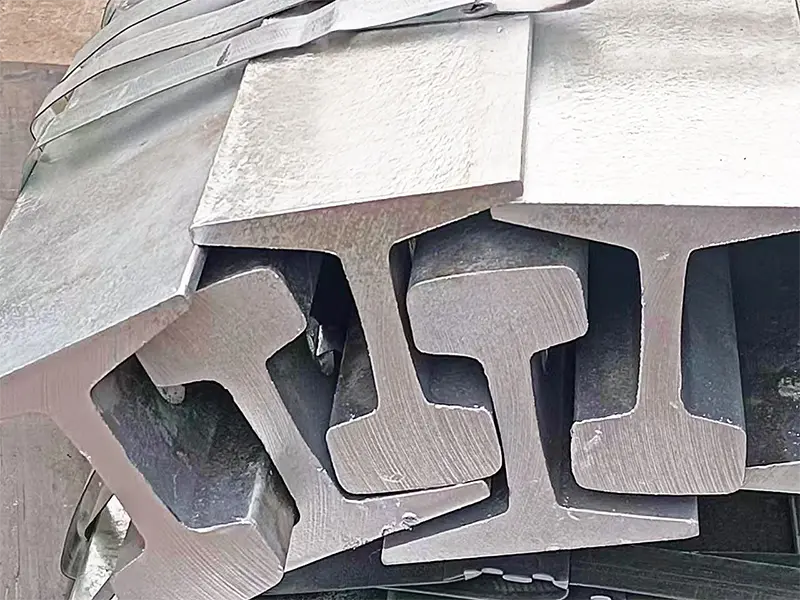
Crane Rail Corrosion Protection: Hot-Dip Galvanizing or Painting?
Why Your Rails Need Corrosion Protection
Crane rails face tough conditions every day. Moisture, temperature changes, chemicals, and stray current all attack the steel. Many buyers think a new crane rail will last 10 years or more. But without proper crane rail corrosion protection, heavy corrosion can cut that life in half. You might get only 5 years.
Rust does more than look bad. It weakens the rail. It affects crane operation. And it raises replacement costs. That is why rail corrosion protection matters from day one.
What Causes Crane Rail Corrosion?
Three main factors speed up rust. Understanding them helps you choose the right crane rail corrosion protection.
First, high humidity. When relative humidity stays above 60%, corrosion accelerates quickly.
Second, airborne pollutants. Salt near coastlines, acid gases in industrial zones, and alkaline dust all attack the steel surface.
Third, wet dry cycles. Rails get wet from rain or condensation. Then they dry out. Each cycle pushes corrosion deeper.
If your crane operates near the coast, inside a chemical plant, or in an outdoor yard with high humidity, you will see severe corrosion without reliable crane rail corrosion protection.
Two Proven Methods for Crane Rail Corrosion Protection
For rail corrosion protection, the industry relies on two surface methods. Here is how they compare.
Method 1: Hot Dip Galvanizing
We dip the steel rail into molten zinc at around 450°C. The zinc bonds with the steel and forms a metallurgical layer. This is a popular choice for crane rail corrosion protection.
Advantages:
This coating lasts a long time. In moderate environments, it can hold up for 20 years or more. You do not need frequent recoating. The zinc layer sacrifices itself to protect the steel. Even if the surface gets scratched, the surrounding zinc protects the exposed steel. The coating covers all surfaces evenly, including the rail web, flange, and base.
Disadvantages:
The upfront cost is higher than paint. You also need a dipping facility large enough for long rail lengths.
Best for outdoor crane rails, coastal areas, high humidity environments, and heavy duty industrial applications where crane rail corrosion protection is critical.
Method 2: Heavy Duty Painting
We spray a liquid or powder coating onto a prepared rail surface. The coating forms a barrier against moisture and chemicals. This offers a different approach to crane rail corrosion protection.
Advantages:
The initial cost is lower. You can apply it in a shop or on site. It comes in different colors for safety or branding. It works well for indoor or low corrosion environments.
Disadvantages:
You need thorough surface preparation, usually sandblasting, to get good adhesion. Paint is less durable than galvanizing. In harsh conditions, you need to recoat every 3 to 5 years. If the paint gets scratched, rust starts immediately at the damage point.
Best for indoor crane rails, dry environments, or as a topcoat over galvanizing for extra rail corrosion protection.
Which One Should You Pick for Crane Rail Corrosion Protection?
For outdoor, coastal, or chemical plant environments, choose hot dip galvanizing. You can also add a paint topcoat for extra protection. This gives you the strongest crane rail corrosion protection.
For indoor, dry, low humidity areas, a quality paint system is fine. It is more cost effective while still providing basic rail corrosion protection.
For mixed conditions like a covered area that still gets humid, hot dip galvanizing gives you a longer service life. Do not compromise on rail corrosion protection in these zones.
For the most demanding applications, many engineers specify a duplex system. That means hot dip galvanizing first, then a paint topcoat. You get both sacrificial protection and an extra barrier. That gives you the longest lasting rail corrosion protection.
What About Other Methods?
You might have heard of cathodic protection, alloyed steel with copper or chromium, or zinc spraying. These methods are available, but for crane rails, they are either too costly, too complicated, or difficult to implement. Hot dip galvanizing and painting remain the two practical choices for crane rail corrosion protection.
Why Choose GlorySteelwork for Crane Rail Corrosion Protection?
At GlorySteelwork, we do more than sell crane rails. We engineer them for your specific environment. We offer both hot dip galvanizing and heavy duty painting in house. You get exactly what your operation needs for rail corrosion protection.
Here is what we provide as standard.
Hot dip galvanizing comes with a minimum 85µm coating thickness. We ensure uniform coverage. We can provide test results on request. That is real crane rail corrosion protection you can trust.
Our painting systems use multi layer anti corrosion coatings. We apply them on properly prepared surfaces. We sandblast to Sa2.5 before painting.