
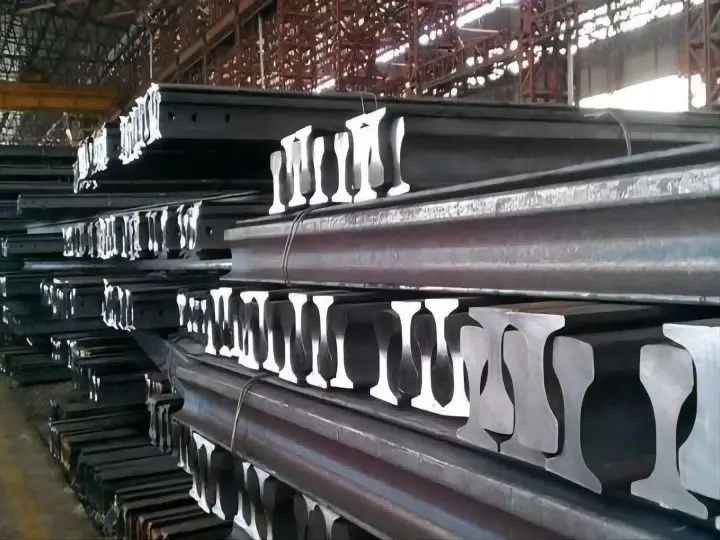
Common Specifications and Brands of Steel Rail
Rail steel is a professional steel used to manufacture tracks for locomotives, cranes, etc. According to Chinese national standards and metallurgical industry standards, rails are divided into railway rails, light rails, conductive rails and crane rails.
Commonly used materials for various implementation standards of rail rails:
Click here you can know more track steel materials and implementation standards.
Main categories
According to Chinese national standards and the standards of the Ministry of Metallurgical Industry, rails are divided into railway rails, light rails, conductive rails and crane rails.
(1) Railway rails
Low alloy rails have been developed based on carbon rails. High-carbon low-alloy rails are stronger than carbon rails and have better wear resistance, pressure resistance, brittle fracture resistance and fatigue fracture resistance. Railway rail types include 38, 43, 50, 60, 75kg/m, etc. Special attention should be paid to preventing the occurrence of white spots during the rail production process.
(2) Light rail
Mainly used in mining and forestry, its varieties are 5, 8, 11, 15, 18 and 24kg/m. Light rail is mainly made of carbon steel, with a small amount of low-alloy steel being used. Light rail used in mines, underground and forest areas requires corrosion resistance, so appropriate amounts of copper, chromium, phosphorus, vanadium and other alloying elements are added to the steel.
(3) Conductive rail
The conductive rails used in underground railways are required to have good conductivity, that is, the resistivity is less than 0.125μΩ.m at 15℃. It is made of high-quality low-carbon aluminum-killed steel.
(4) Crane rails
The chemical composition and manufacturing process of special cross-section rails used for various crane guide rails are the same as those of railway rails. Varieties include QU70, QU80, QU100, QU120, etc.
Rail steel brands: Baotou Steel, Panzhihua Steel, Yongyang
Application scope
Track steel is used in a wide range of applications in railways and rail transportation. First of all, it is used for the laying of railway track beds. The track steel and the track bed are fixed by a protective layer to ensure the stability and safety of the railway tracks. Secondly, it is used for fixing after track laying, which can effectively disperse the load of the wheels on the track and reduce structural stress and wear.
Track steel can also be used in the construction of tram lines to ensure the smooth operation of trams and the safety of passengers. In addition, it is also widely used in the construction of port terminals to ensure the safe loading, unloading and transportation of goods.